Insights · 11/05/2026 · Updated 11/05/2026
Adelaide case study: burnt main switch, partial supply, and near-fire risk
Last Friday, we got a call from an Adelaide homeowner after a sudden full-house power loss.
The lights were out, power points were dead, the fridge had stopped, and the air conditioning was offline. From the customer point of view, it looked like the entire property had gone down.
But one detail stood out: the small red indicator at the electricity meter was still on.
We asked the customer to check the switchboard and confirm whether any breaker or overload protection had tripped. They reported that all breakers looked ON. The board also had older ceramic fuses, which made it difficult for a non-electrician to tell what had actually failed.
At that point, the safest decision was immediate attendance.
What we found on site
When our technician arrived, the cause was clear very quickly.
The main switch had severely overheated and melted. The switch body was burnt and carbonised.
The unusual and dangerous part was that upstream protection had not disconnected supply in the way most homeowners would expect. Parts of the board were still energised.
That combination, visible thermal damage plus remaining energised sections, created a serious fire risk condition.
If this had gone unnoticed for longer, there was a realistic chance of escalation inside the switchboard enclosure.
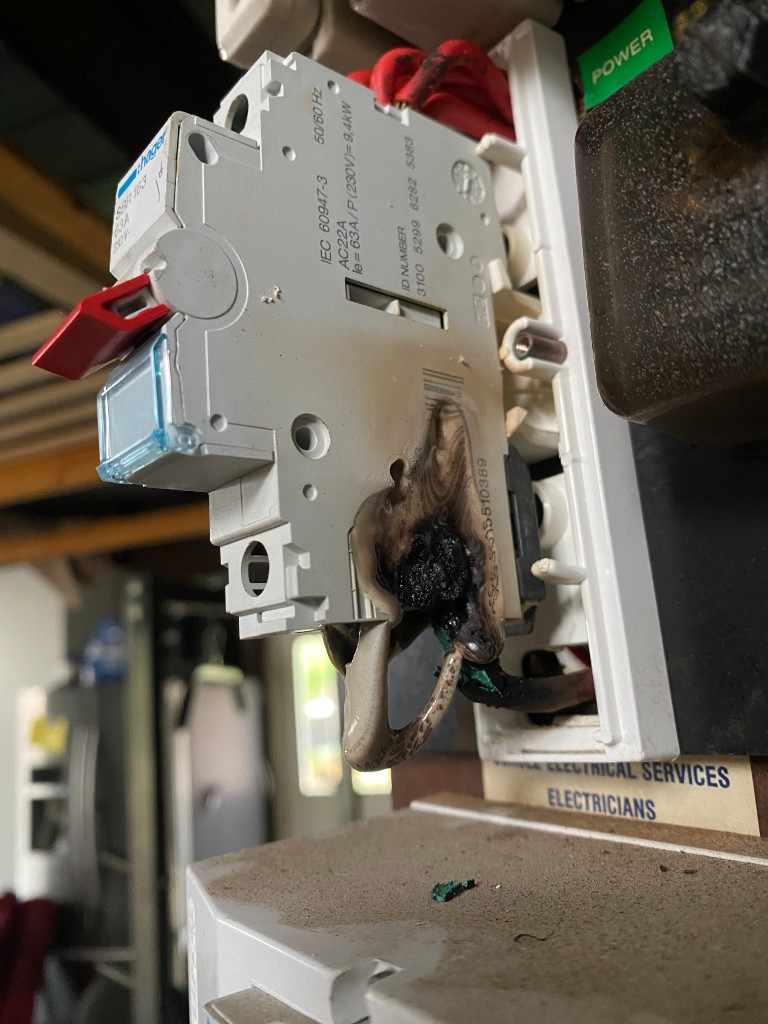
Field photo: thermal damage and carbonisation at the main switch connection point.
Why this installation was under pressure
This home had several large electrical loads in normal use:
- EV charger
- large ducted air conditioning
- large oven
However, supply and board configuration reflected older demand assumptions. The property was still on an older 10mm2 mains supply and had legacy ceramic fuse protection in the board.
This is the pattern we are seeing more often across older Adelaide housing stock: demand has moved forward, infrastructure has not.
The result is not always immediate failure, but reduced margin for fault conditions and less tolerance for sustained heavy load.
For a practical background on similar board conditions, see common switchboard issues in Adelaide homes.
Secondary compliance issue discovered during upgrade
During remediation, we also found an earthing non-compliance that required correction.
The switchboard earthing had been connected to a metallic gas pipe rather than a compliant earth electrode system. That arrangement is not accepted under modern requirements and could not be left in place.
So the job was not only “replace one failed part.” It required a full safety-led upgrade path.
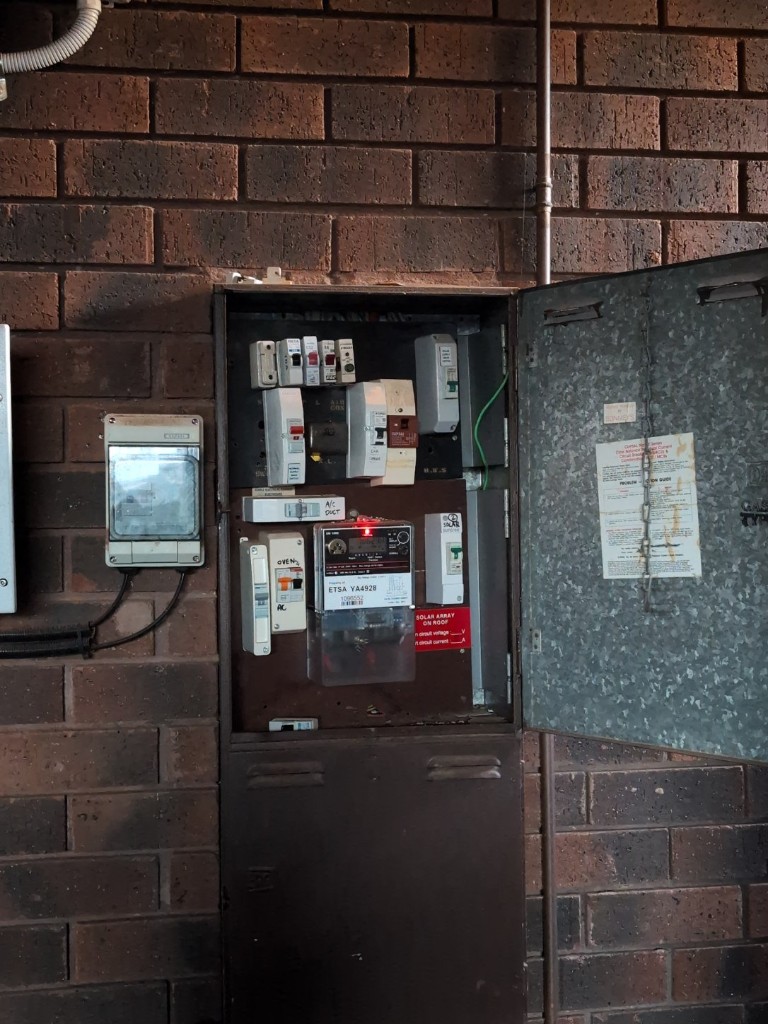
Field photo: board condition before rectification works commenced.
Remediation scope completed
To return the installation to a safe and future-ready state, we carried out:
- complete switchboard upgrade
- replacement of old fuse protection with modern RCBO protection
- circuit reorganisation and cleanup
- installation of a compliant earth electrode system
- SAPN coordination for mains upgrade
- supply upgrade from single-phase to three-phase
- mains cable upgrade from older size to 16mm2
This was a structured remediation, not a cosmetic panel swap.
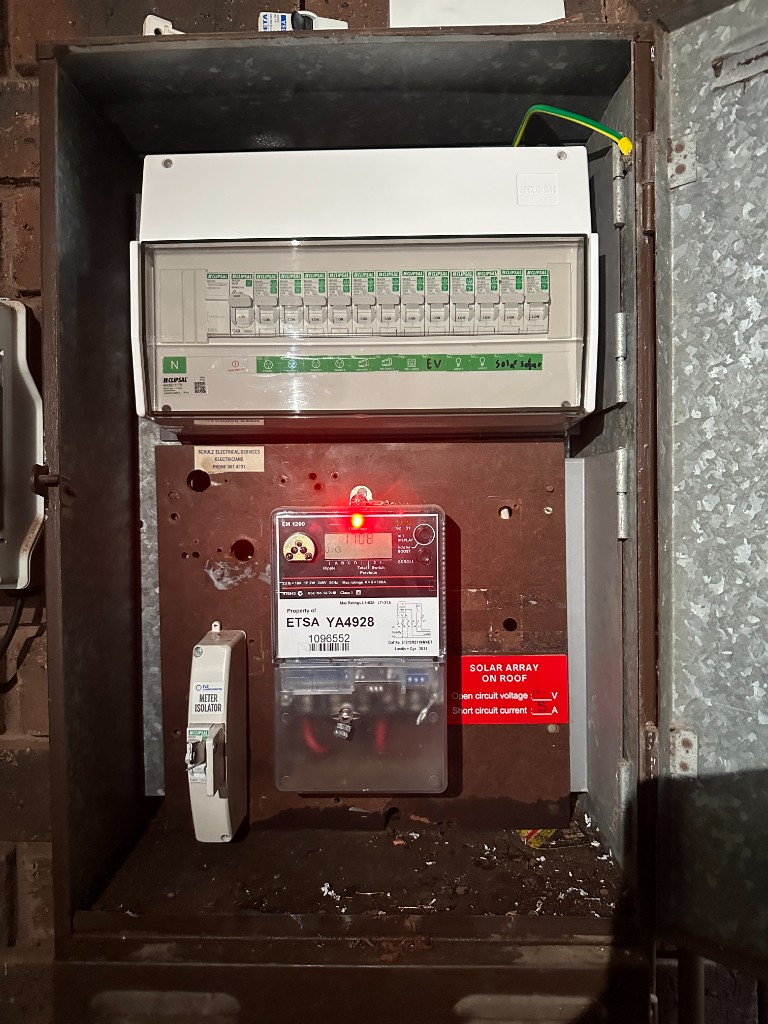
Post-upgrade field photo: upgraded board arrangement after rectification and protection modernisation works.
What Adelaide homeowners should take from this case
This case is a reminder that many older homes are no longer simply “dated.” Some are operating close to electrical failure thresholds because modern loads have increased faster than board and mains capacity.
Common additions now include EV charging, high-capacity air conditioning, and heavy kitchen loads. Those are all valid upgrades, but they need to sit on infrastructure designed for that demand profile.
Warning signs are not always obvious before a serious fault. In this case, breakers appeared ON from the homeowner perspective, but the main isolation device had already failed under heat stress.
If you are buying, this is exactly why switchboard condition and supply context should be reviewed early in due diligence, not after settlement. Our cooling-off electrical defects checklist is a good starting point.
For Adelaide buyers in cooling-off
If you are in a contract decision window, prioritise electrical risk early. A clear defect severity assessment helps separate urgent safety work from staged upgrades and gives you practical negotiation context.
Book a pre-purchase electrical inspection
If your home is adding high-load circuits
If you are planning EV charging, larger HVAC, or major kitchen electrification, confirm board protection, earthing, and mains capacity before adding more load.
FAQ (Adelaide homeowners)
If all breakers look ON, can the switchboard still have a serious fault?
Yes. Breaker position alone is not a reliable safety diagnosis. In this case, the main switch had failed thermally and parts of the board remained energised.
Does adding an EV charger automatically mean I need a full switchboard replacement?
Not always. It depends on current board condition, protection configuration, and mains capacity. Some homes need targeted work; others need broader upgrade scope.
Why is earthing compliance such a big issue during upgrades?
Earthing is foundational safety infrastructure. If the earthing arrangement is non-compliant, it must be corrected as part of safe remediation.
Is this only a problem in very old homes?
Older homes are higher risk, but risk depends on current load profile and legacy modifications, not just building age.
Need an electrical verdict before settlement?
Book a pre-purchase inspection with a licensed electrician and get a written report you can act on.
Book pre-purchase inspectionRelated reading
More Adelaide electrical insights and inspection guides will be listed here as content grows.
Related service page: /pre-purchase-inspection